—
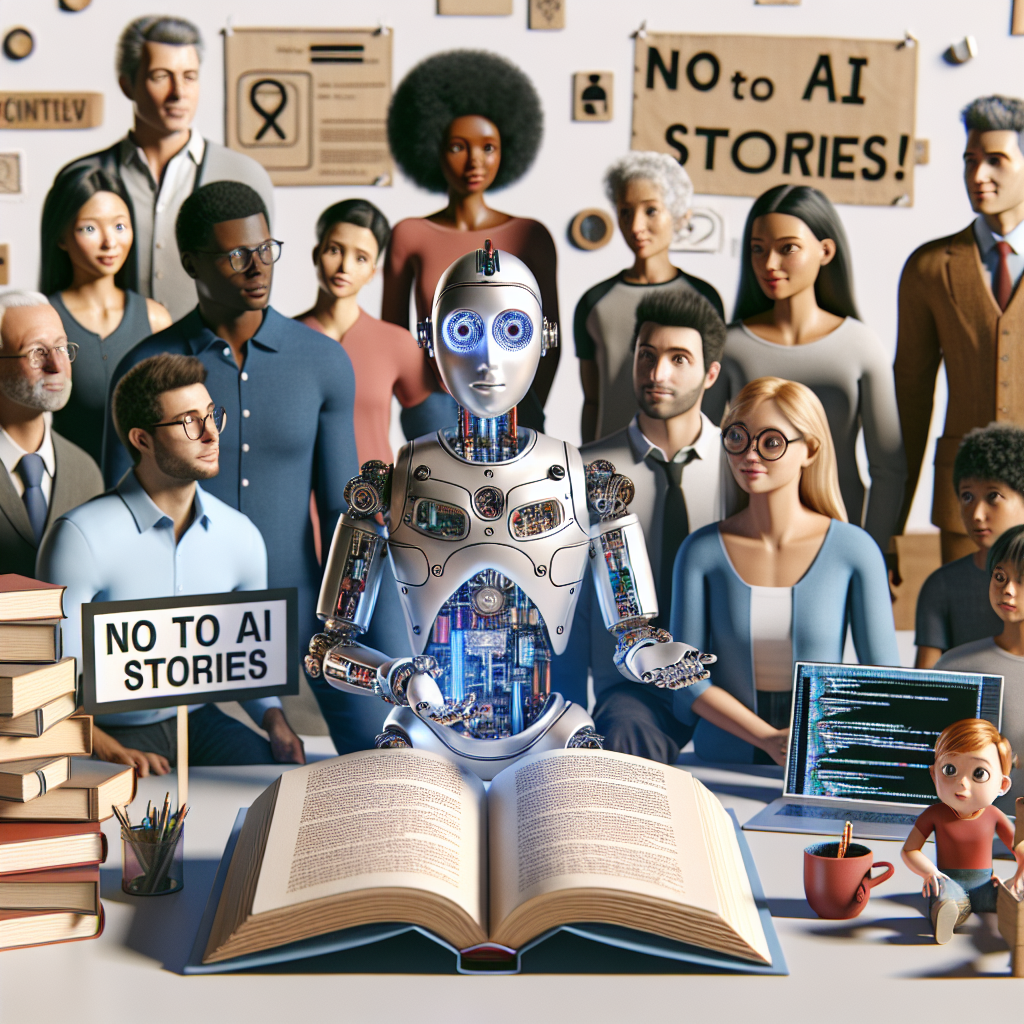
### The AI Dilemma: Why Creatives and Academics Prefer Human Touch Over Machine
**Subheading: Is AI Creativity Just Art’s Junk Food?**
Artificial Intelligence (AI) is taking giant strides in various fields, from healthcare to marketing. However, when it comes to creativity and academia, there’s a growing resistance. Many in these spheres argue that AI-generated content is akin to junk food: alluring at first but ultimately lacking substance. This perspective raises an intriguing question—how sustainable is AI creativity?
#### The “Junk Food” Metaphor and AI Content
The notion likening AI-generated content to junk food was vividly captured in a recent article discussing how creatives and academics grapple with this technology. Justine Bateman, for example, voices a widespread sentiment that audiences will eventually tire of AI’s offerings. So, why does the junk food analogy resonate so well?
Consider your favorite meals—rich in texture, flavor, and memory. They aren’t just about quick satisfaction. They’re crafted with love and intention. Similarly, traditional creative processes bring a depth that AI often misses. AI can mimic the elements of a gripping story or a striking piece of art, but can it really capture the essence of human experience and emotion that’s foundational to meaningful art?
#### Creativity and Humanity: Where AI Falls Short
AI’s ability to churn out content is impressive but often lacks the unpredictability and nuance of human creativity. When art stems from lived experiences and deep understanding, it tends to resonate more with audiences. Human-created content is infused with cultural references, emotional truths, and unique perspectives that machines find hard to replicate.
Those in fields like writing, filmmaking, and teaching often worry that AI efficiency and cost-effectiveness could overshadow the genuinely human touch. This concern isn’t just about job security; it’s about preserving the integrity of stories and lessons that shape human understanding.
#### AI: A Creative Tool or Competitor?
While AI’s capabilities can’t be dismissed, many see it best as a tool rather than a replacement. For instance, AI can assist artists in overcoming creative blocks by generating initial ideas or providing unconventional suggestions. In academia, AI might handle data analysis while leaving complex theoretical development to the human mind.
It’s here that we see AI in its most effective role: a collaborator helping expand creative horizons without overwhelming the original artistic intent. When used well, AI can free creatives and educators from time-consuming tasks, allowing them to focus on adding depth and soul to their work.
#### Moving Forward: Balancing Innovation and Tradition
As AI technologies continue to evolve, the key lies in striking a balance. Creativity isn’t about competing with machines; it’s about embracing what makes us uniquely human. By using AI as an assistant rather than an adversary, we can enhance our creative efforts, leaving room for innovation without losing the quintessential human touch.
In conclusion, while AI-generated art may draw parallels to junk food—tempting and easy to consume—it lacks the nourishment of human-crafted art. For creatives and academics, the challenge lies in finding harmony with AI, ensuring that technology enhances rather than erodes the rich tapestry of human expression.
 Trend Engine: AI-Powered News & Trends