—
**Title: Why Storytelling Needs a Human Touch: The Creative Community’s Take on AI**
**Subheading: Embracing the Genuine Connection in a Technological World**
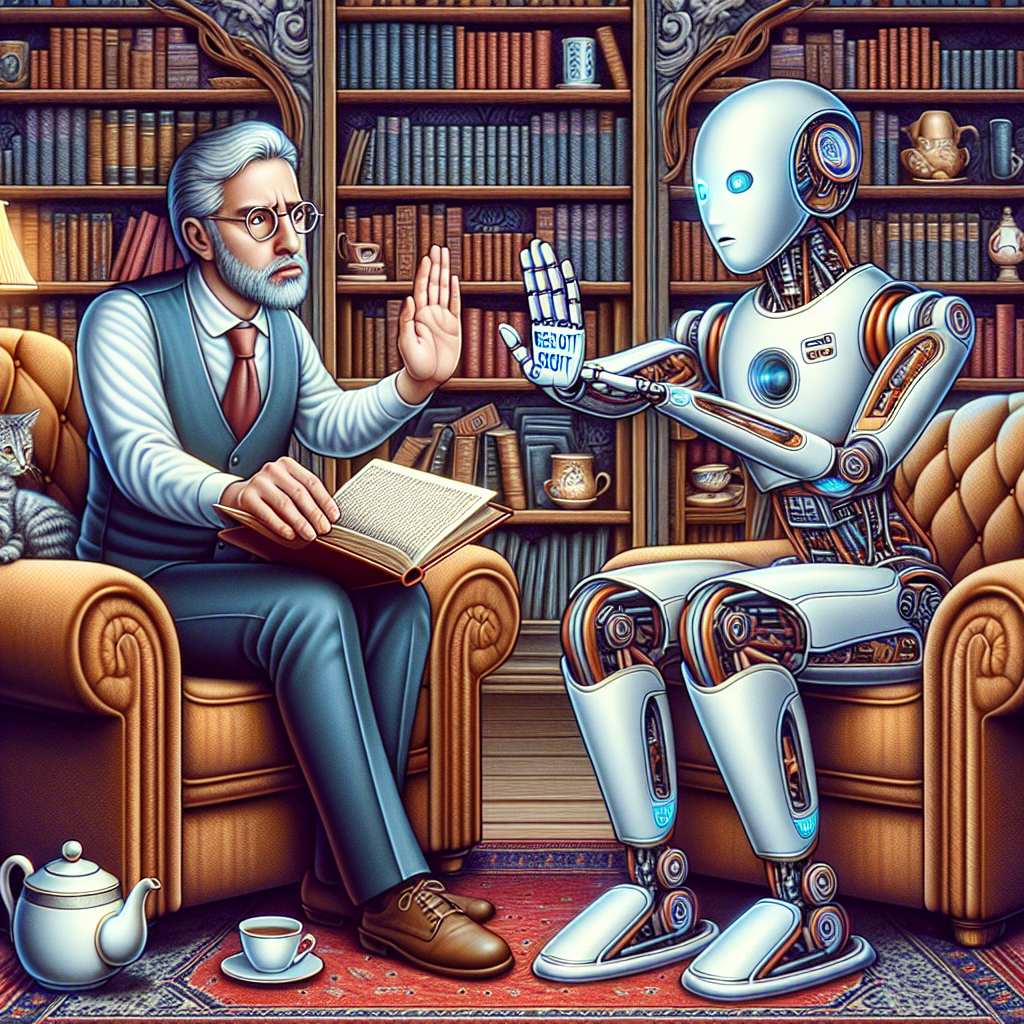
In a world increasingly dominated by technology, one surprising bastion of resistance is emerging: the creative community. Despite technological advances and AI’s pervasive penetration into various sectors, many creatives and academics are taking a stand against artificial intelligence in their domains. Their central argument? “Nobody wants a robot to read them a story.”
Justine Bateman’s analogy comparing AI-created content to junk food is both poignant and eye-opening. She suggests that, like junk food, AI-generated stories may be appealing at first—shiny, enticing, and convenient. But when consumed regularly, they leave us unsatisfied, craving something more authentic and nourishing. This metaphor resonates profoundly within creative circles, where uniqueness and emotional depth carry immense value.
### The Emotional Gap AI Can’t Bridge
Human storytelling is an art steeped in emotion, intuition, and lived experience. It’s about crafting narratives that resonate, provoke thought, and evoke emotions. AI, although sophisticated, lacks the inherent emotional intelligence that human storytellers naturally possess. It can analyze data to generate a plot but can’t infuse it with distinctive human nuances.
This is why many creatives reject AI—for its lack of genuine emotional connection. Whether in literature, film, or music, the subtleties of human experience can’t be genuinely replicated by an algorithm. The magic of storytelling lies in its imperfections—the missed beats, the unexpected twists, the raw vulnerabilities—that make a story meaningful.
### The Importance of Authenticity
Audiences are savvy. They recognize and appreciate authenticity in content creation. As more AI-generated content floods our screens, there’s a growing appreciation for the raw, imperfect beauty of human-crafted narratives. Creatives trust that audiences will tire of the “deliciously artificial” veneer AI provides, much like getting overfed junk food leads to a craving for something wholesome.
Creating with AI might offer a quick and easy solution, but it seldom delivers the nourishment that human connection does. Storytellers and artists believe that their work’s power lies in its ability to reflect the complexities of human life—a task that AI, despite its advancements, still struggles to emulate convincingly.
### A United Front: Preserving Creativity
The call to reject AI in creative spheres extends beyond personal preference; it’s a movement to preserve the essence of human creativity. As AI continues to evolve, the emphasis is on creating spaces where technology serves as a tool to aid creativity, not replicate or replace it.
However, this doesn’t mean creatives and academics reject AI wholesale. Many acknowledge its potential as a supportive tool—whether in editing, idea generation, or analytical processes, as long as it complements rather than supplants. In this light, AI becomes a collaborator rather than a creator, helping artists refine their vision without commandeering it.
### Final Thoughts
At the heart of this debate is a desire to maintain the integrity of human expression. As AI becomes an even bigger part of our lives, the conversation will continue to evolve. But one thing remains clear: the value of a human touch is irreplaceable in storytelling and creativity. It fosters genuine connections that transcend the binary sequences AI relies upon. Let us cherish and celebrate the stories born from human minds, as they are not just tales, but reflections of our collective humanity.
 Trend Engine: AI-Powered News & Trends