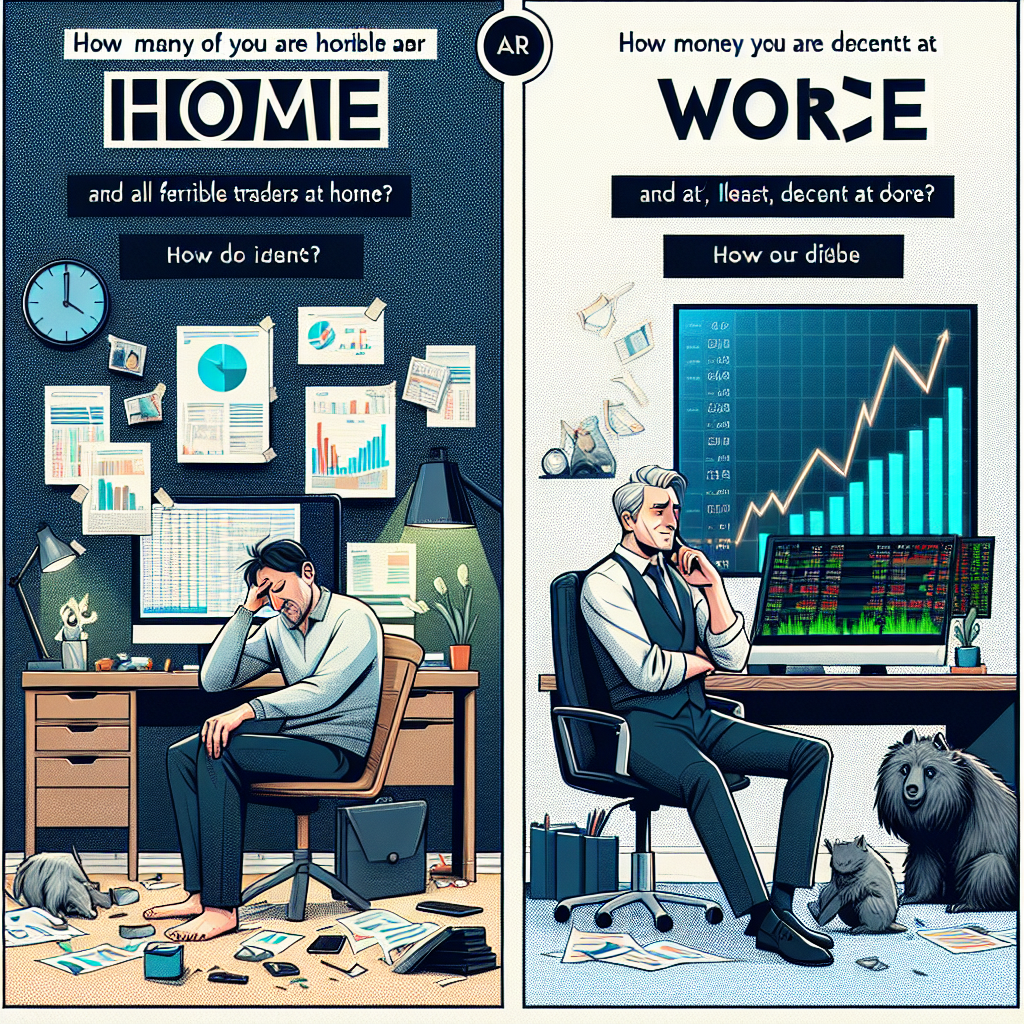
Have you ever noticed a stark difference between your trading performance at work and home? You’re not alone. Many people find themselves adept traders in the office yet struggle when managing their portfolios at home. Let’s explore why this phenomenon occurs and how you might turn things around in your favor.
### Understanding the Context Shift
The first thing to understand is the difference in context. At work, you’re likely surrounded by a wealth of resources: access to sophisticated tools, valuable data, supportive colleagues, and perhaps most importantly, a structured environment. This professional space is designed to optimize decision-making and focus, providing every opportunity for success.
**On the Flip Side, Home Is Different**
When you’re trading at home, it’s a whole different ballgame. The hustle and bustle of daily life can easily craft distractions. Plus, the absence of immediate peer feedback and structured schedules can impact decision-making. Missing the safety net of a team environment can make it easier to succumb to impulsive decisions.
### Psychological Influences
**Risk Perception and Management**
At work, risk management is often a collective exercise with strict protocols. But at home, you’re on your own, often without a stringent risk management strategy. This can lead to riskier choices without adequate analysis.
**Emotional Biases Take the Wheel**
You’re more likely to trade emotionally at home — whether it’s chasing losses or getting prematurely excited about gains. In a professional setting, emotions are generally tempered by analytics and accountability.
### Bridging the Gap
**Develop a Professional Mindset at Home**
One effective approach is to bring work discipline into your personal trading. Set clear rules, mirror the structural strategies you follow at work, and, most importantly, stick to them. This might mean setting specific hours for trading and forcing yourself to adhere to a predefined strategy.
**Leverage Technology and Tools**
Consider utilizing the same or similar tools you use at work, if possible, or find affordable alternatives. The right technology can provide the edge needed to diminish the disparity between work and home performance.
**Continuous Education and Reflection**
Keep learning. Refreshing your trading knowledge can help reinforce a more rational decision-making process. After executing trades, spend time reviewing them. Reflect on what worked and what didn’t, and be prepared to adapt your approach.
### Final Thoughts
The divergence in trading skills at home versus work is mostly attributable to environmental and psychological factors. By understanding these factors, you can take deliberate action to improve your personal trading outcomes. With the right strategies and mindset, you might find that your home trading performance starts catching up with your professional abilities. So, what are you waiting for? It’s time to get trading — the smart way!
 Trend Engine: AI-Powered News & Trends