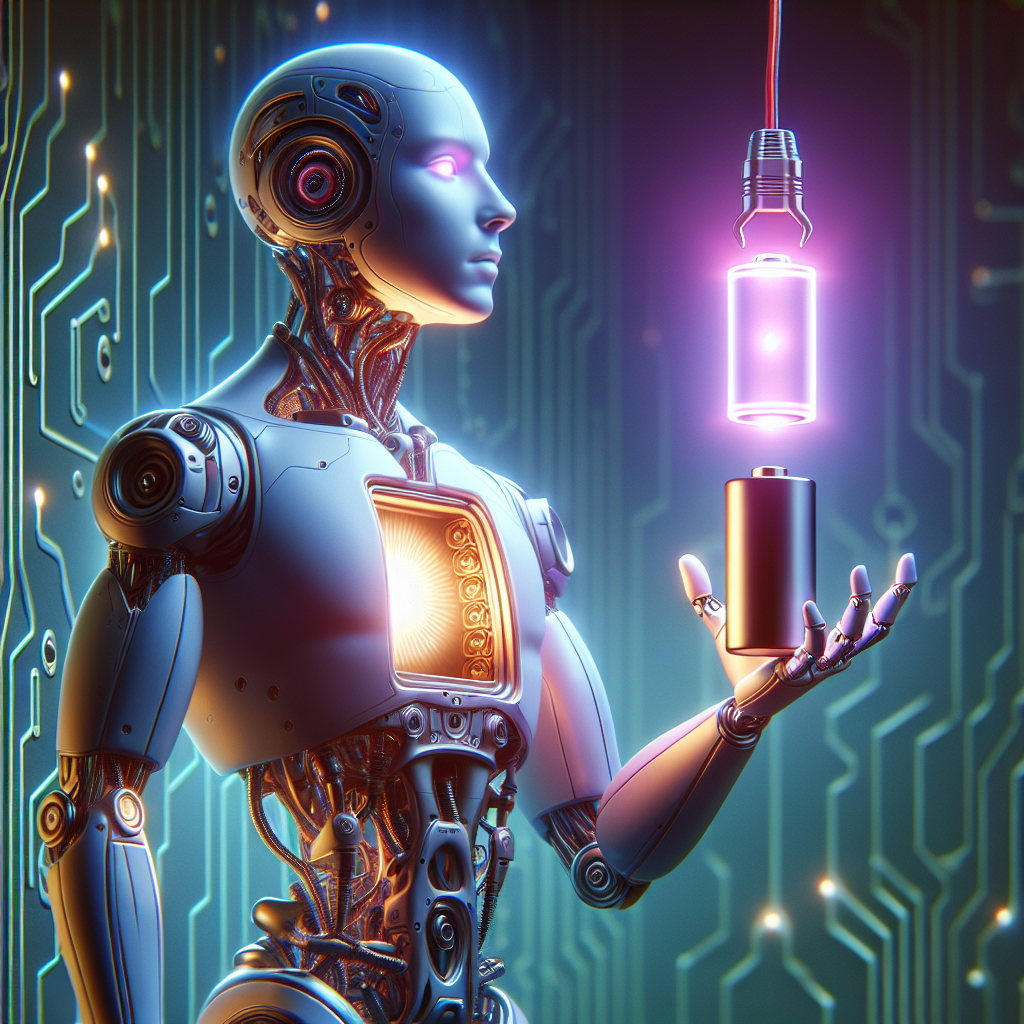
Title: Meet the Future: China’s Humanoid Robot That Changes Its Own Batteries
Subheading: A Revolutionary Step in Robotics and Innovation
If you think of robots, you might imagine scenes from sci-fi movies with sleek machines performing tasks effortlessly. But what if I told you that we’re not too far from that reality? Enter China’s latest technological marvel: a humanoid robot that can change its own batteries. Yes, you read that correctly. This isn’t a vision from the future—it’s happening right now.
China has taken a significant step forward in the realm of robotics, unveiling this incredible self-sufficient machine. The ability of a robot to change its own batteries marks a groundbreaking development because it drastically reduces the downtime typically associated with recharging or battery replacement. This feature could pave the way for more robots being integrated into daily tasks, especially in environments where human intervention is minimal or undesirable.
### What Makes This Robot Special?
The humanoid robot is designed not just to perform basic tasks, but to handle its energy requirements independently. Imagine a scenario where robots work around the clock with little to no human support required for maintenance. This self-sufficiency could be a game-changer for various industries, including manufacturing, healthcare, and even space exploration.
Autonomous energy management is crucial for robots meant to operate in remote or hazardous locations. By allowing robots to change their batteries independently, downtime is minimized and productivity is maximized, potentially saving resources and time. This development could lead to the creation of robots that can perform more complex tasks without regular human oversight.
### Implications for the Future
Such advancements reflect a broader trend in robotics—towards greater autonomy and efficiency. The humanoid robot’s ability to self-manage its power could inspire new designs that further blend AI, machine learning, and robotics. We could see an increased deployment in settings like disaster recovery, where continuous operation is often critical and challenging.
Moreover, this achievement signals China’s growing influence in the field of AI and robotics. As this technology matures, it also lays the groundwork for more sophisticated versions, driving the competition and innovation in global markets.
### The Road Ahead
It’s exciting to ponder what the future holds. As robots become more autonomous, they can take on roles that were once thought exclusive to humans. While the practical applications are still unfolding, one thing is clear: the era where robots independently sustain and manage themselves is on the horizon.
By embracing innovations like these, we step closer to a world where technology and human life are seamlessly integrated. But this integration also raises questions about the role of humans in a robotic world and the ethical implications involved. Balancing technological advancement with ethical considerations will be a crucial challenge.
China’s humanoid robot changing its own batteries is a remarkable leap in the world of robotics. It’s not just about saving a trip to the charging station—it’s about the evolution of technology to a state where it can reinvent itself. So, keep an eye on this space, as the robots of tomorrow might just be charging themselves right in front of us.
 Trend Engine: AI-Powered News & Trends