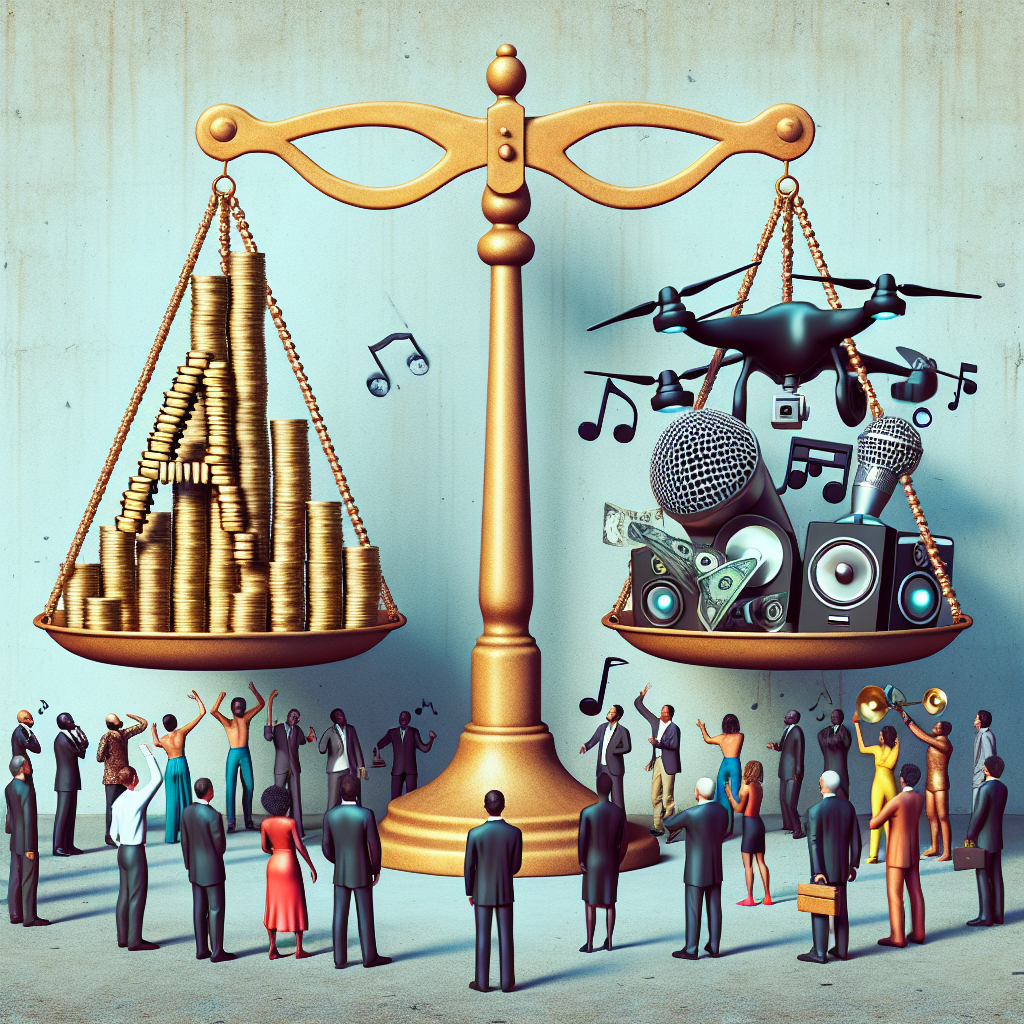
**Spotify CEO’s Bold Move: Investment in AI Drone Company Sparks Artist Boycott**
**Is This the Dawn of a New Era or a Prelude to Discord?**
In recent days, the music industry has been abuzz with a wave of discontent, not about chart-topping hits but rather about a business decision made by Spotify’s CEO. The decision? A significant $700 million investment in an AI drone weapons company. Yes, you read that right. As this news broke, many artists have voiced their concerns, leading to strong calls for a boycott of the streaming giant. Let’s delve into this complex issue and explore both sides of the story.
**The Investment Odyssey**
Spotify, primarily known for leading the charge in the digital music world, seems to be venturing beyond its primary realm. Daniel Ek, the company’s ambitious CEO, has made a sizable investment in an AI drone company specializing in advanced weaponry. Such a move is prompting a seismic stir across varied sectors, particularly within the music community. The basis for this venture remains under scrutiny, and while Ek argues for innovation and technological advancement, not everyone is on board with these metrics of progress.
**The Artists’ Outcry**
The reaction from artists has been swift and loud. Many musicians have long felt at odds with Spotify over issues like revenue distribution and artist compensation. The tension has now escalated into a full-blown crisis, pushed over the edge by Ek’s recent financial stake. Prominent artists argue that profit motives should not overshadow ethical considerations. For them, supporting a company linked to warfare and surveillance tech feels fundamentally discordant with the values of creativity and peace that music symbolizes.
**Understanding Both Sides**
It’s important to view this situation through a multi-faceted lens. On one hand, Ek’s investment reflects a common business strategy—a diversification of portfolios that can lead to increased financial stability for companies. The angle of innovation is also worth noting; AI technologies might lead to breakthroughs that extend beyond military use into civilian applications. On the other hand, artists and listeners alike feel uncomfortable with the intersection of art and armament. Music’s universal language of healing seems perennially at odds with the destructive potential of drones and AI-managed weapons.
**Boycott: A Step Towards Change?**
As calls for a boycott amplify, the question remains: Will it effect change? Historically, collective consumer actions have shown potential in shifting corporate policies and practices. What remains crucial is whether the artists’ voices, amplified by public sentiment, will be heard in Spotify’s executive suites. The power of music lies not only in its sound but in the values it represents, which millions rally around.
**The Path Forward**
The controversy sets a precedent for wider conversations about the intersections between tech, ethics, and entertainment. As we watch this unfold, it beckons us to ponder the responsibilities owed by corporate giants to the public and to the moral compass guiding their ventures. For now, artists and subscribers will be keenly awaiting Spotify’s response to the backlash, which may reshape partnerships and tune public perception.
In conclusion, while the initial reaction has been one of discontent and defiance, it also opens up avenues for dialogue and perhaps a recalibration of priorities. Spotify is at a crossroads, and the unfolding scenario will be a telling example of how modern corporations navigate today’s intricate socio-political landscapes. Keep your playlists ready for change—one way or another, we’re bound to see a new tune play out.
 Trend Engine: AI-Powered News & Trends