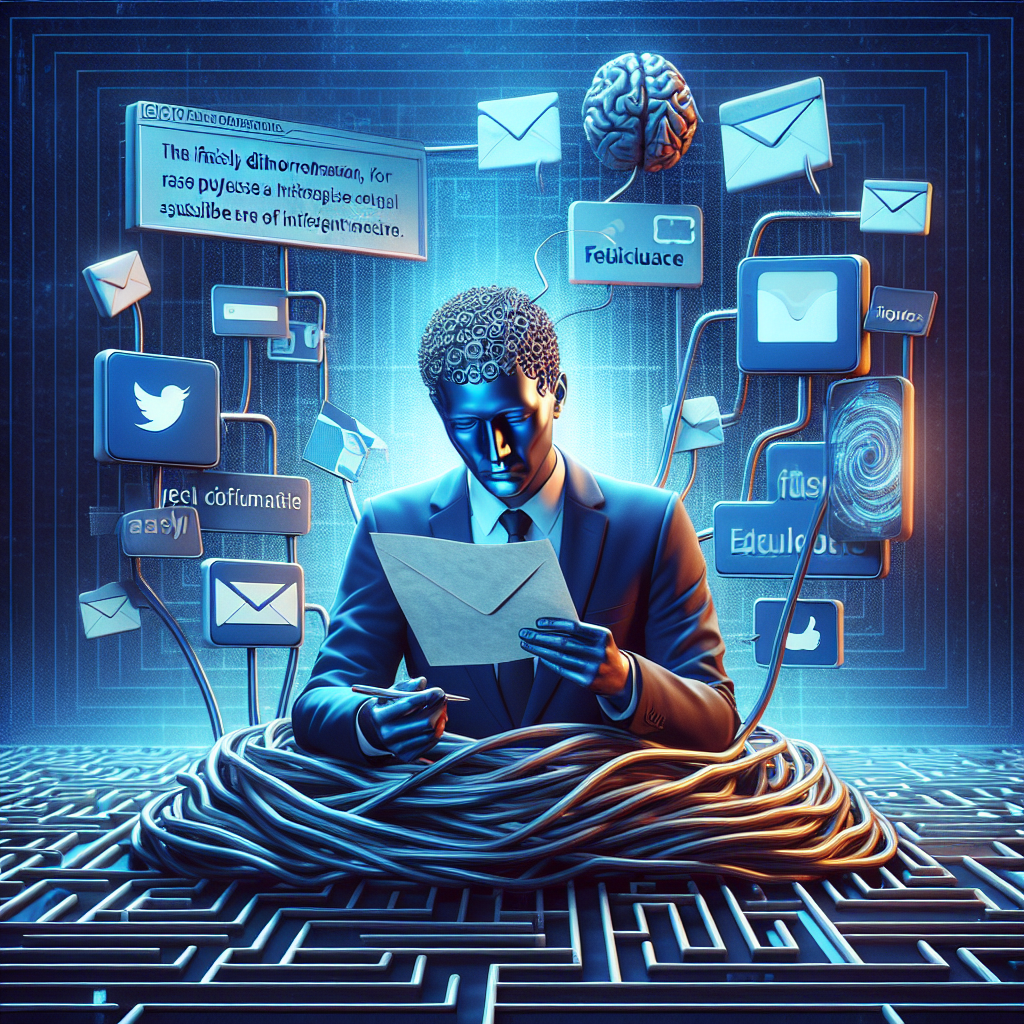
**Title: The Age of Misinformation: Why Are Some Politicians So Easily Fooled on Social Media?**
**Subheading: Understanding the Intersection of Fake News, AI, and Social Media Trust**
Social media, the digital marketplace of ideas, has become both a beacon of solidarity and a breeding ground for misinformation. This duality was recently highlighted in a curious incident involving Senator Mike Lee, a known supporter of Donald Trump. The Republican senator from Utah found himself in an embarrassing position when he unwittingly shared a fake letter, which appeared to be crafted by artificial intelligence.
But why do incidents like these happen so often, particularly among Trump’s political allies? Is it just an unfortunate misunderstanding, or is there a deeper, underlying issue at play? Let’s dive into the world of fake news, AI-generated content, and the peculiar trust issues that arise in political circles on social media.
### The Power of AI in Content Creation
Artificial Intelligence has transformed the way we create content. From drafting simple emails to concocting intricate fake news articles, AI has incredible capabilities. The technology can mimic human-like writing styles, making it difficult to distinguish between AI-generated content and legitimate sources. While these advancements are fascinating, they also pose a significant threat when used maliciously.
### A Culture of Quick Judgments
The speed of information dissemination on platforms like Twitter and Facebook often encourages snap judgments. With news feeds constantly updating and the pressure to comment quickly, users, even seasoned politicians, can fall prey to misinformation. This might have been the case for Senator Lee. In a fast-paced digital world, taking a moment to fact-check before sharing information is crucial, yet often overlooked.
### Trust in the Echo Chamber
Many supporters of Donald Trump and similar political figures often reside within echo chambers—closed environments where they are primarily exposed to opinions and information that reinforce their views. These closed-off spaces contribute to a heightened susceptibility to fake news that aligns with their beliefs. When a fake letter conveniently supports their narrative, the likelihood of it being accepted as truth increases.
### The Role of Social Media Platforms
Social media platforms have made efforts to combat misinformation, but the challenge is immense. Algorithms designed to maximize engagement frequently amplify the most sensational and polarizing content. This creates an environment ripe for the spread of misleading information. While companies like Twitter and Facebook are enhancing their strategies to identify and halt the spread of false news, the process is ongoing.
### Critical Thinking: A Necessary Tool
So, how can individuals safeguard themselves against the illusions presented by modern misinformation? The answer lies in cultivating critical thinking skills. By questioning the sources, cross-verifying facts, and seeking information from multiple perspectives, one can significantly reduce the risk of being misled.
### Conclusion: A Call for Responsibility
As we navigate this age of digital information, the responsibility falls on each of us to verify and question the validity of the content we encounter. Whether you are a casual observer or a figure of authority like Senator Mike Lee, being discerning about the information shared on social media is more important than ever.
The convenience of information on the internet comes with the obligation to be cautious and informed users. Let’s make concerted efforts to combat the spread of false information and foster an online environment grounded in truth.
 Trend Engine: AI-Powered News & Trends