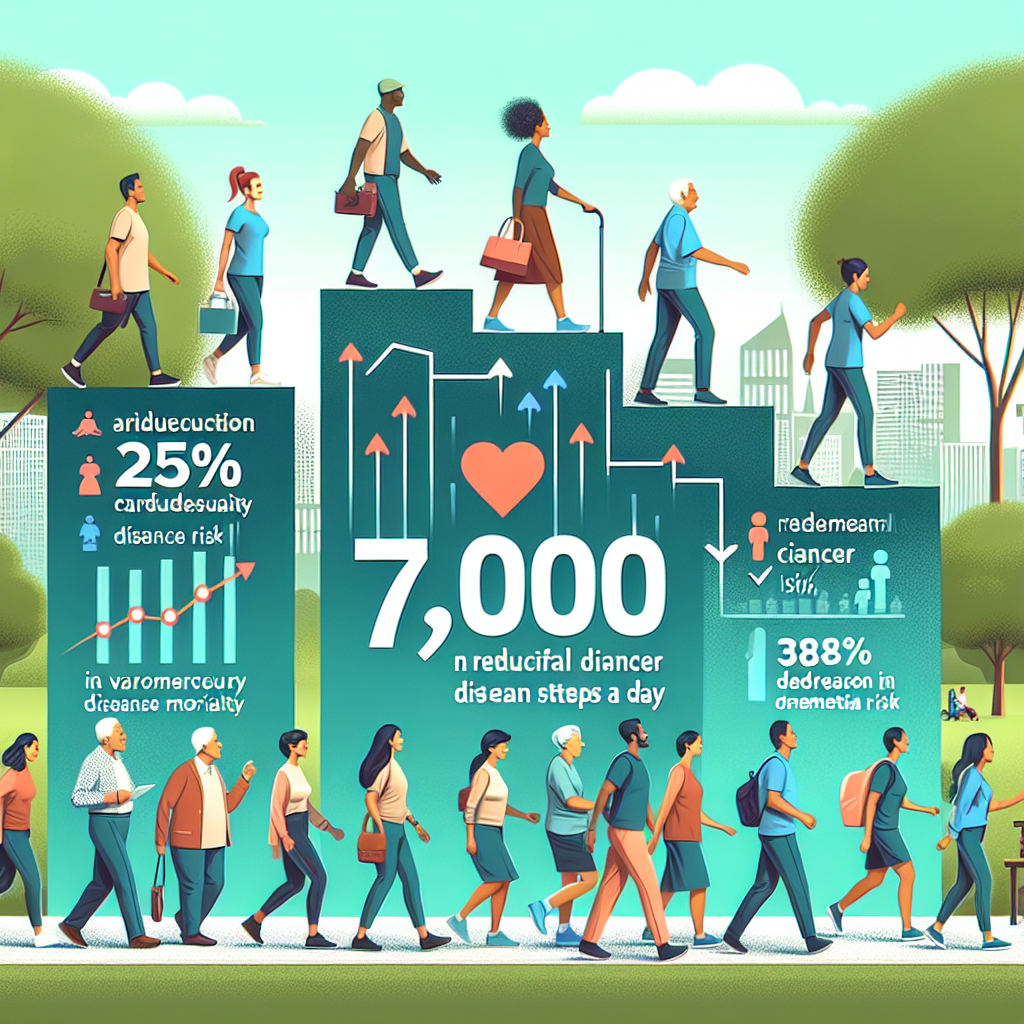
If you’ve ever felt daunted by the recommended 10,000 steps a day challenge for good health, there’s good news. New research suggests that taking just 7,000 steps daily can significantly improve your health and reduce the risk of several serious diseases.
#### Why 7,000 Steps is Your New Magic Number
You might be wondering, why 7,000 steps? A recent meta-analysis brings this sweet spot into focus, showing that hitting this target can lower the risk of developing certain health conditions significantly.
Imagine reducing your risk of cardiovascular disease by 25%. That’s exactly what participants in studies have experienced. But that’s not all. The same research indicated a 37% lower risk of dying from cancer and a whopping 38% reduction in the risk of dementia.
#### How Walking Benefits Your Health
Walking is one of the simplest and most accessible forms of exercise. It’s easy on your joints, requires no special equipment, and best of all, you can do it almost anywhere. Here’s how those 7,000 steps daily can lead to remarkable health improvements:
1. **Cardiovascular Health**: Regular walking strengthens your heart, helping it to pump more efficiently. This facilitates better circulation and lowers blood pressure, cutting down the risk of heart diseases.
2. **Cancer Prevention**: Physical activity, such as walking, can help regulate hormones, boost the immune system, and reduce inflammation—all factors that help in lowering cancer risk.
3. **Cognitive Health**: Walking enhances the circulation of blood to the brain, which can improve brain health and avert the progression of cognitive decline, thus reducing the risk of dementia.
#### Practical Tips to Reach Your Daily Steps
Hitting 7,000 steps a day doesn’t have to be hard. Here are some tips to get you moving:
– **Incorporate Walking into Your Routine**: Take the stairs, park further away from your destination, or have walking meetings.
– **Set Small, Achievable Goals**: Start with shorter walks and gradually increase your distance.
– **Use Technology**: Step counters or fitness trackers can help you stay motivated and keep track of your progress.
– **Buddy Up**: Walking with friends or family can make your exercise time more enjoyable and increase accountability.
#### The Bottom Line
Swapping the ambitious aim of 10,000 steps with a more attainable 7,000 could be the key to enhancing your longevity and well-being. The research is clear: taking 7,000 steps each day can play a significant role in reducing the risks of serious illnesses. So why not lace up those shoes and make walking a delightful part of your daily routine?
Remember, every step you take is a step towards a healthier life. Embrace the journey, one step at a time.
 Trend Engine: AI-Powered News & Trends