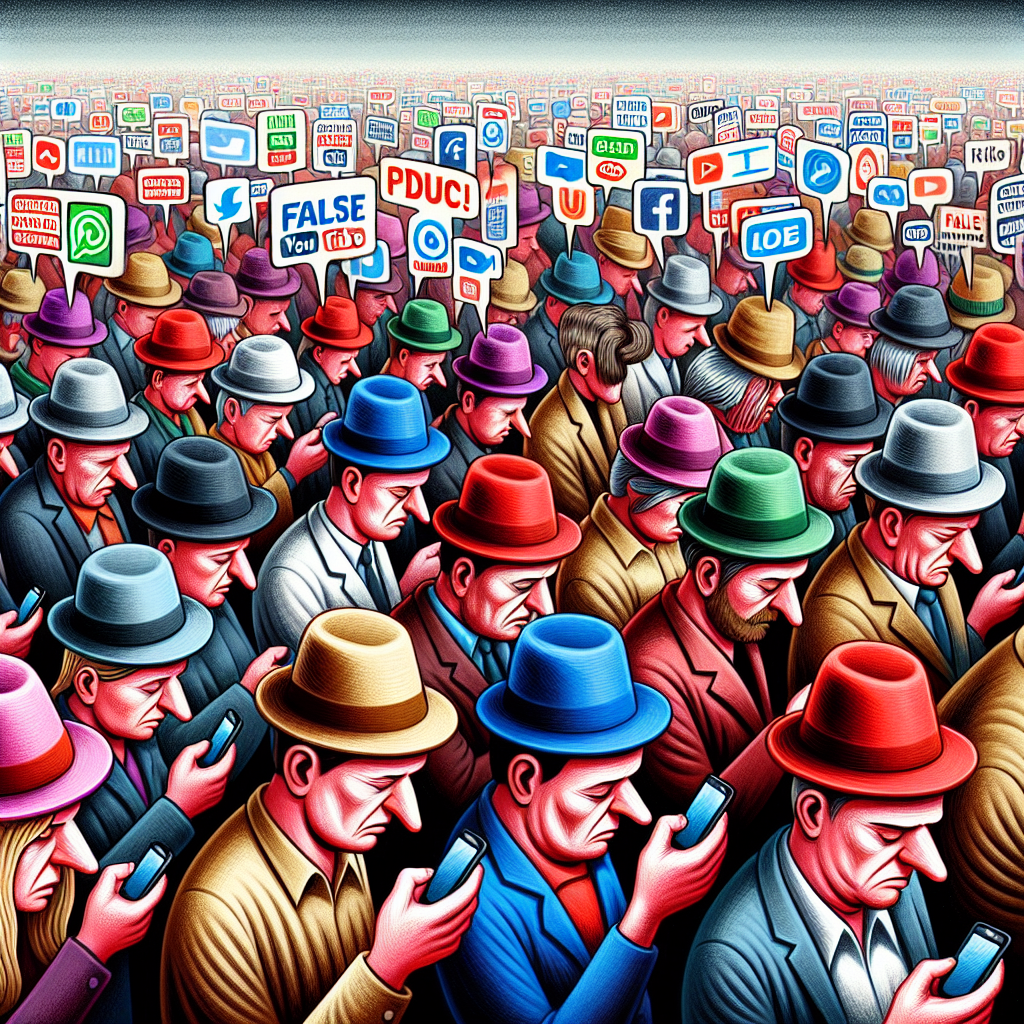
Subheading: Navigating the Waters of Social Media Misinformation
In today’s digital age, distinguishing between fact and fiction on social media can be as tricky as untangling holiday lights. Recently, MAGA Senator Mike Lee found himself entangled in a web of digital deceit when he fell for a fake letter allegedly generated by AI. This incident raises an important question: why are some people, especially public figures, so easily fooled by online misinformation?
**The AI Dilemma in Misinformation**
Artificial Intelligence, once a futuristic notion, is now an integral part of our daily lives. While it brings numerous benefits, it also poses challenges, particularly in the realm of misinformation. The ability of AI to create convincingly realistic content—from texts to deepfake videos—makes it increasingly difficult to discern what’s real from what’s not.
In Senator Mike Lee’s case, a seemingly legitimate letter transformed into an embarrassing mishap as it was revealed to be a forgery. For public figures and everyday users alike, this is a wake-up call to be more discerning about the digital content we consume and share.
**Why Are We So Easily Fooled?**
The internet is a vast, fast-paced environment where information spreads like wildfire. Here are a few reasons why some fall into the misinformation trap:
1. **Confirmation Bias:** People tend to believe information that aligns with their existing beliefs and dismiss what contradicts them. As supporters of certain ideologies, individuals can be more susceptible to misinformation that reinforces their viewpoint.
2. **Information Overload:** With an overwhelming amount of content available every second, the ability to critically analyze every piece of information is diminished. People often share content without verifying its authenticity.
3. **Echo Chambers:** Social media platforms curate content based on user preferences, often creating echo chambers where individuals are exposed to similar views, reinforcing potentially misleading information.
**Staying Vigilant Online**
The good news is, with a few simple practices, we can protect ourselves from falling for digital deceptions:
– **Verify the Source:** Always check the credibility of the information source. Established and reputable news organizations are generally more reliable than obscure blogs or social media posts.
– **Cross-reference Information:** Before sharing, look for multiple sources to confirm the authenticity of a piece of content.
– **Be Skeptical of Too-Good-To-Be-True Content:** Sensational headlines and outrageous claims are often clickbait. Approach them with a healthy dose of skepticism.
– **Educate Yourself on Digital Literacy:** Understanding how AI and algorithms work equips you to better navigate the digital landscape.
By fostering critical thinking and digital literacy, we can collectively foster a more informed and less misled online community. As the Mike Lee incident reminds us, awareness and skepticism are our best defenses in the face of evolving digital deceptions. So, next time you find yourself scrolling through social media, remember to stop, think, and verify before you share. Let’s keep the internet a safe, reliable space for everyone.
 Trend Engine: AI-Powered News & Trends