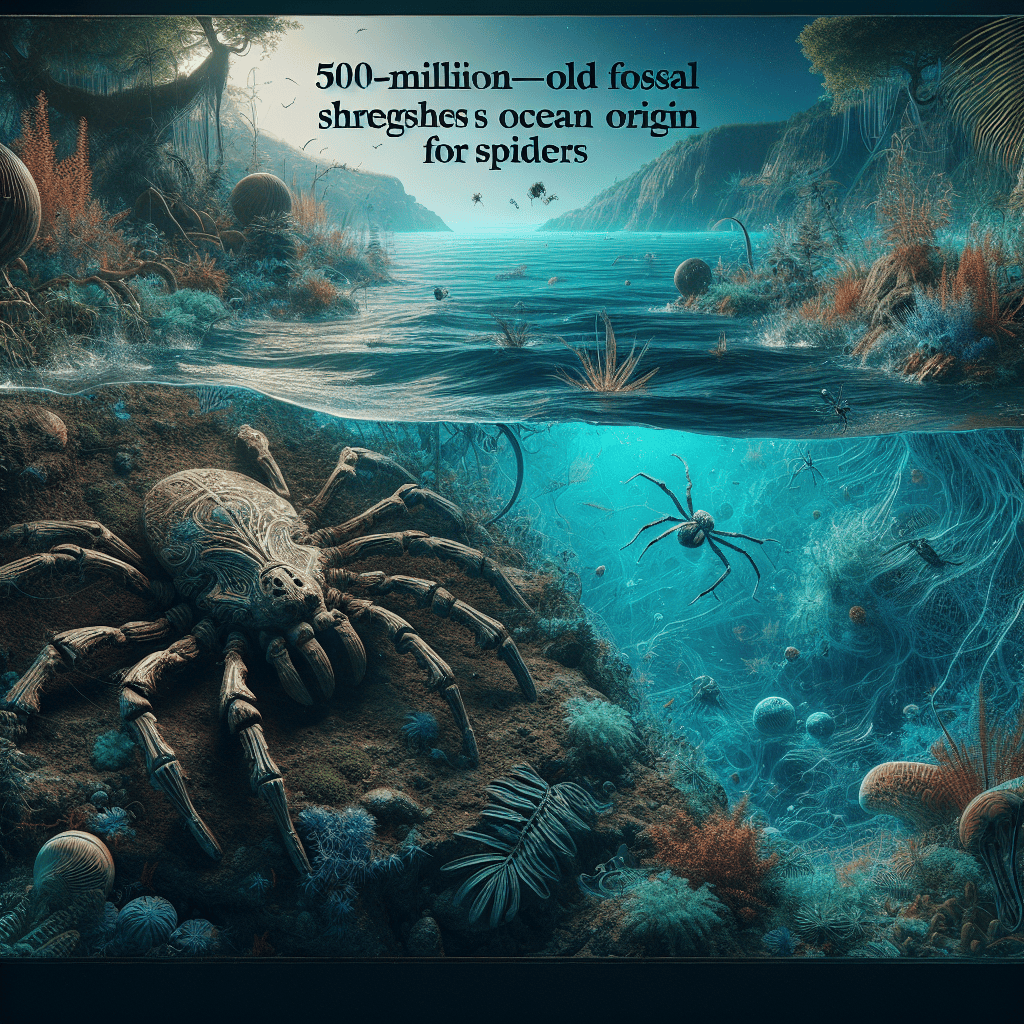
Have you ever wondered where spiders came from? If you’re tapping into your inner scientist, or perhaps just a curious soul, this intriguing question might have crossed your mind. Thanks to a groundbreaking discovery, we may now have a clearer picture of our eight-legged friends’ ancient past.
**Unearthing the Past**
Scientists recently stumbled upon a 500-million-year-old fossil that turns our understanding of spider evolution on its head. This remarkable find strongly suggests that the ancestors of modern spiders had their origins in the ocean. Yes, you heard it right—those webs we often associate with dusty attics and shaded corners have marine beginnings.
**A Deep Dive into Arachnid Roots**
The fossil in question belongs to an ancient creature known as a megacherid. These were early arthropods, distant relatives of today’s spiders, scorpions, and horseshoe crabs. What makes this fossil so captivating is its features reminiscent of underwater dwelling life. This discovery provides a link that challenges the predominantly terrestrial narrative of spider evolution.
**Connecting the Dots**
Before this discovery, the prevailing theory was that arachnids, including spiders, transitioned from water to land much like how vertebrates did. This fossil, however, paints a picture of a more complex journey. The marine traits observed suggest that as environments changed, these early creatures adapted to life on land, evolving various features that we recognize today in our arachnid friends.
**Why This Matters to Us**
Understanding the origins of species like spiders helps us grasp the intricate history of life on Earth. It allows us to appreciate the complexity of evolutionary paths and sheds light on how environmental changes have shaped life over millennia.
For those passionate about science or anyone curious to learn more about the natural world, such discoveries offer a vivid glimpse into the past, sparking questions about the future. What might other fossils reveal? How can these insights inform current biodiversity and conservation efforts?
**A New Chapter in Arachnid Evolution**
While the newfound evidence supports a marine origin for spiders, it opens the arena for further research and exploration. Beyond the astonishing facts and figures, this fossil story encourages us to keep questioning, keep discovering, and remain in awe of the history written in the stones beneath our feet.
So, next time you see a spider weaving its web, remember that its ancestors may once have navigated prehistoric seas, long before spinning strands in our world today. With every fossil find, another page in the book of life is unveiled, bringing us closer to understanding the rich tapestry of evolution.

