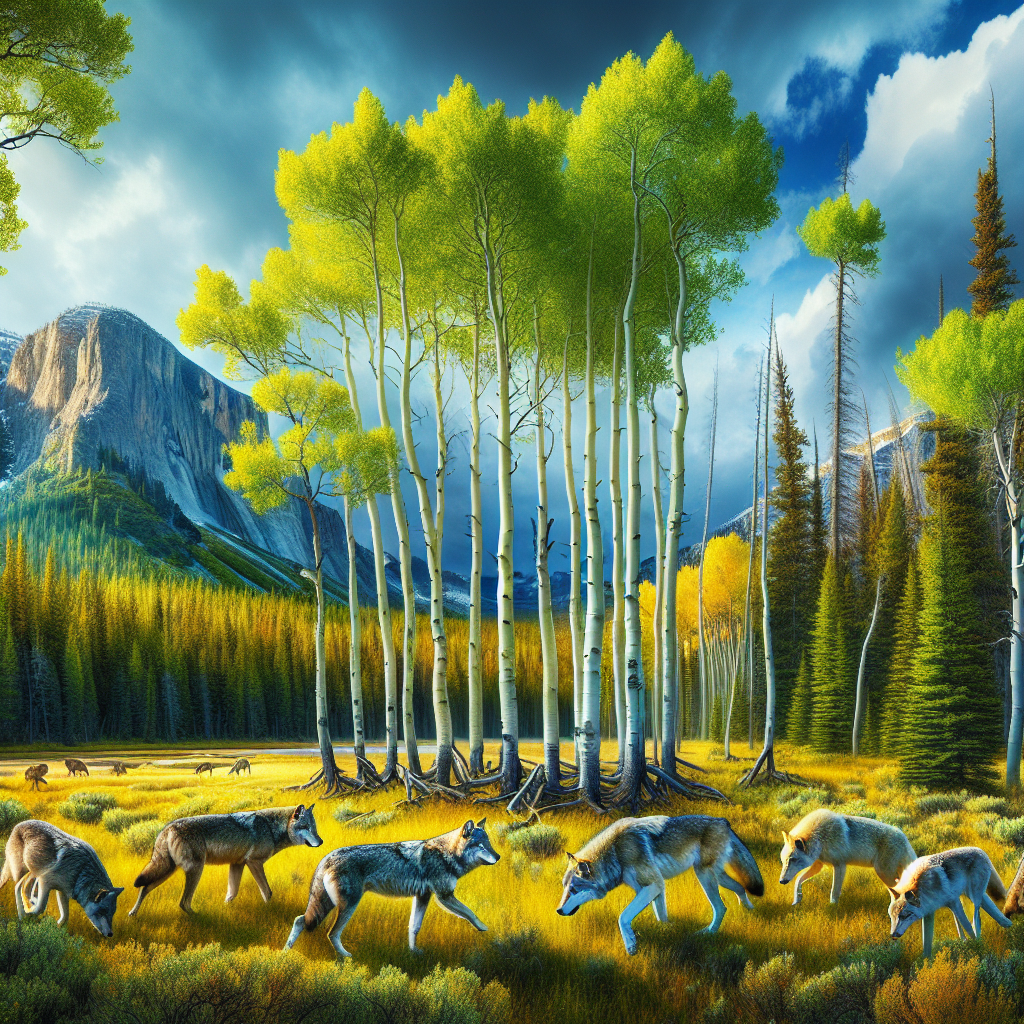
Yellowstone National Park, known for its breathtaking landscapes and diverse wildlife, serves as a stunning example of nature’s intricate balance. Recently, a fascinating narrative has emerged from this iconic ecosystem. It’s a story of how the reintroduction of wolves has led to the unexpected flourishing of aspen trees, highlighting just how interconnected our natural world truly is.
### The Wolves’ Return
Back in 1995, wolves were reintroduced to Yellowstone after a seventy-year absence. Their disappearance had left a significant gap in the park’s ecosystem. But why reintroduce them at all? Simply put, wolves are apex predators, meaning they play a critical role in maintaining the natural order.
### The Big Change: A Surge in Aspen Trees
Since their return, these pack animals have dramatically altered the landscape, indirectly leading to a resurgence of aspen trees. But how does one lead to the other? The answer lies in the concept of trophic cascades, which occurs when predators at the top of the food chain influence the structure and population dynamics of the entire ecosystem.
The presence of wolves has curbed the population of herbivores, particularly elk, who consider young aspen shoots a delicacy. With fewer elk around to graze the young trees, aspen groves have started to thrive once again. This natural balancing act shows the power of predator-prey dynamics.
### Why Aspen Trees Matter
Aspen trees are more than just a pretty face in the forest. They are vital to ecological health, providing habitat and food for a range of species, from birds and insects to elk themselves. Their thriving presence also aids in soil stabilization and carbon capture, crucial in combating climate change.
### More Than Just Trees
The impact of the wolves doesn’t stop with the trees. Other plant species and animals in the park are also benefiting. Increased growth in vegetation provides more food and shelter for birds, insects, and mammals, contributing to the overall biodiversity of Yellowstone.
### A Lesson in Ecological Interconnection
Yellowstone’s story teaches us crucial lessons about the complexity and interconnectedness of nature. It reminds us that every species, predator or prey, plays a distinct and crucial role within their ecosystem. Removing one can have unforeseen consequences, just as reintroducing one can bring unexpected benefits.
### Final Thoughts
The resurgence of aspen trees thanks to wolves is a living testament to the power of nature’s balance. As conservation efforts continue worldwide, the Yellowstone example stands as a powerful illustration of what can happen when nature is allowed to heal and thrive on its own terms.
So, next time you think about wolves as fearsome predators, remember their role as ambassadors of balance and architects of wilderness restoration. Let’s continue to support conservation and witness the incredible results for ourselves and future generations.
 Trend Engine: AI-Powered News & Trends